A genius at being wrong


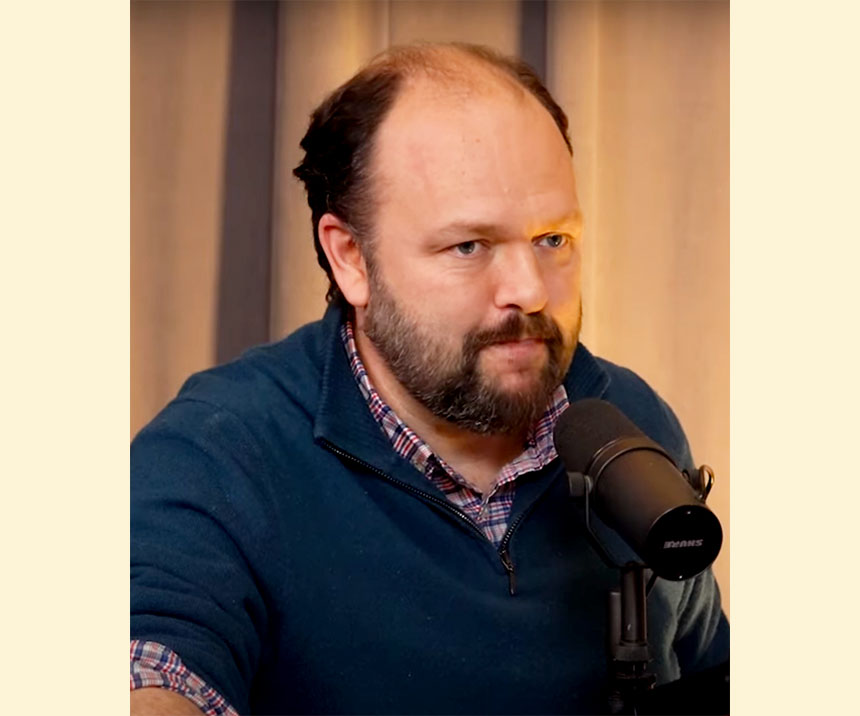
Ross Douthat. Source: Wikimedia Commons.

Ross Douthat wrote his last column at the New York Times today. It’s Who Are the Good Guys and Who are the Bad Guys? I’m No Longer Sure.

Douthat’s high-flown but completely addled discourse over the years is a perfect example of why a conservative mind is so disgusting. As I have said many times before, all conservative discourse is derp. Conservative discourse, inevitably, contains intentional deception, or self deception, or both.

In this column Douthat includes a list of why non-conservatives are the bad guys. He states each charge as though it is self-evidently true, not even open to argument.

• The Obama “establishment” was morally permissive and smugly cosmopolitan.
• It failed to anticipate the downsides of expert-driven policy.
• It was caught flat-footed by the darker effects of technological change.
• It pushed social liberalism so far it left vulnerable people “adrift or abandoned to their vices.”
• It blundered in foreign policy by not expecting the non-Western world to push back.
• The Biden “establishment” repeated the same “meritocratic hubris” in a more left-wing key.
• It swapped experts for “interest groups.”
• It “maxxed out” on social liberalism.
• It “unraveled completely in the end.”
• The old elite has “no blueprint suited to contemporary governance.”
• “Peak woke” was “a McCarthyite experience.”
• Blue-state governance “yielded civic and educational collapse.”

Douthat doesn’t feel the need to present any evidence for any of this. To Douthat, it’s just self-evidently true. It serves a propaganda purpose — slandering the left as crudely and deceptively as any meme you’d find on X.

And it all boils down to this: It’s the left that is to blame for American fascism, and it’s no wonder that so many Americans turned to fascism given just how unbearable the Obama and Biden America was.

And then there is his main point: He’s still not sure who the bad guys are.

He does have some criticisms of the Trump regime, but he hedges them all, as though Trump is just some mild sort of person with no real power: “But as Trumpism has flailed and failed, it hasn’t consolidated the kind of authoritarian power anticipated by its most alarmed opponents. At the moment, Trump 2.0 has no great popularity, no legislative capacity, no policy legacy that a Democratic successor can’t easily roll back.”

So we just roll it back (easily!), and it was nothing but a nothing-burger?

At least we’re rid of Douthat at the Times. I don’t watch television. I don’t have any insight into how much harm people like Douthat can do at CBS’s “60 Minutes.”

It’s both baffling and hilarious. Minds exist that think Donald Trump is noble, wise, godly, and admirable. And minds exist that think Ross Douthat is smart.

Such is the conservative mind.

Camelot: If only we can get there from here …


I haven’t had a musical post lately, so here we are.

I’ve listened to this Andrew Burnap version of “Camelot” at least two dozen times. Partly, I think, it’s because it’s some of most flawless singing I’ve heard lately, and partly because it’s good therapy for those of us who are doing our best to keep our heads while living under MAGA fascism.

I confess that I watched the first 15 minutes or so of “Snow White” on Disney+ to hear more of Burnap’s singing. It was disappointing — not because of Burnap’s singing, but because the songs and the production weren’t all that great. I can see why the movie bombed. What Andrew Burnap chiefly needs is a revival of a show such as “Kismet.”


Summer is winding down in not-Camelot

We’re arriving at the end of the drama of the tomato cycle. In the spring, the first stage of the cycle is preparing the spot. Then, when it’s warm enough, in go the skinny little tomato plants. Next, for what seems like months, one nurses them along and dreams of tomato sandwiches. Then there is the first tomato sandwich. And then two or three tomatoes a week. And then, come early August, all at once there are so many tomatoes that they have to be made into sauce. After that, the tomatoes peter out.

Today I need to make my second batch of tomato sauce of the season. Fortunately one can’t have too much of that stuff. Come to think of it, I think I’ll make vegetable soup, even though it’s August.


The Age of Improvement: 1783-1867, by Asa Briggs. Second edition 2000. First edition 1959.


The Endarkenment

This is not a review, because I’ve just started reading this book. Asa Briggs begins by describing the lay of the land in Britain in the late 18th Century, as an era of progress was beginning. The Enlightenment had introduced an enormous amount of new light into the world. Briggs wants to show, though, how many people resisted the light.

The church, unsurprisingly, put up some of the strongest resistance. The poor, some argued, were poor because it was the will of God. Struggling with poverty was a divine trial that improved the soul. To rebel against one’s place in the social order was to rebel against God. Should the poor even be educated? Hierarchy was God’s design, and those at the top of the hierarchy were put there by God.

Cruelty didn’t much bother such people. In An Essay on the Principle of Population, Thomas Robert Malthus wrote that a man born poor, whose family cannot feed him, “has no claim of right to the smallest portion of food, and, in fact, has no business to be where he is.” There were those who argued that poor relief or concerns about the health of the poor interfered with nature’s beneficial weeding out of the weak.

The parallel I am reacting too, of course, is how similar this is to where we find ourselves today. Few of our lords and betters are unguarded enough to say these things outright. It’s what they do that reveals what they think and the kind of government they want. Education, health care, and whether children have enough to eat isn’t as important to them as that the rich have the freedom and low enough taxes to get richer.

That such people are now in control of the American government, in spite of our Enlightenment Constitution, is constantly astonishing and constantly horrifying.

People have brought back the light before, though, so surely we can do it again, especially now that the American ignorati are ever so slowly figuring out that they were bamboozled by con men who don’t give a rat’s foot about the little people.


How much retro can you handle?

Regular readers here know that all communications technology fascinates me, the old as well as the new. In my first job as a newspaper copy boy, I took care of a room full of Teletype machines and used a Teletype terminal to send local stories out to the Associated Press. Back in the 1980s, I ran a quite popular and literate bulletin board system named Science Fiction Writers Network.

Several months ago, just because I love playing with computers, I set up another bulletin board system (BBS). It has been sitting idle, waiting for people to find it. In the old days, people dialed into BBS systems using modems and phone lines. My new BBS does in fact have a modem connected to it, but these days one connects to a BBS over the Internet. And yes, there are still a great many BBS systems still in operation, though hardly anybody uses them (or even knows about them) anymore.

My new BBS is named The Last Telegraph Office. To connect, you will need to use the terminal program that comes with your computer. Whether you use Windows, Linux, or a Macintosh, you will have a terminal program. In the terminal program, you should find an app named “ssh.” That stands for “secure shell.”

The exact command may vary according to the type of computer you have and how your ssh app behaves. On my Macintosh, the command looks like this, and as far as I know the same command should work on Windows:

ssh -p2222 bbs.acornabbey.us

At “Select Terminal Codepage,” enter a 1.

From there the prompts should be familiar if you’ve used a BBS in the past. Poke around and see what you find. If you go to the [M]essage area, in the “Local” message groups (as opposed to the “Fidonet” message groups), you’ll find a new discussion area for the Into the Woods blog.

[P]ost a message there and let us know you’ve arrived!


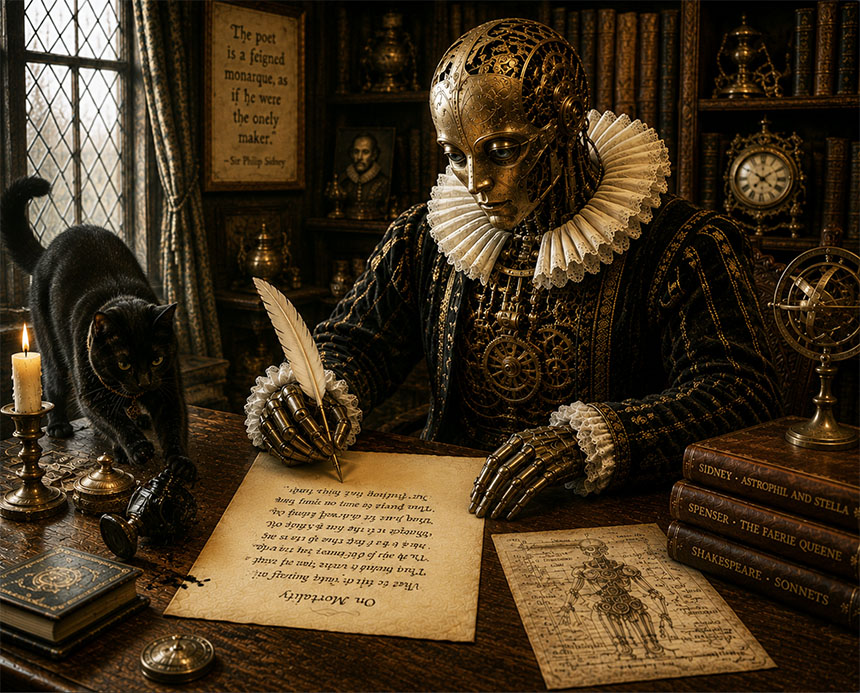
Image by ChatGPT. Click here for high-resolution version.

AI: The new scapegoat?

Something I’ve been thinking about lately…

While corporations, the military, and all things wicked in the world are pushing hell for leather to maximize the use of AI, the rest of us are being flooded with commentary (I might even say propaganda) on how and why not to use it. The implication is that AI is just too powerful to be safe in the hands of those of us lower in the social order.

If I were conspiratorially minded, I might wonder whether someone doesn’t want us to be empowered, because they like keeping power to themselves. Surely, as a part of the question of who uses AI for what, there are some democratic values to be defended.

My attitude is: If we come into the possession of a powerful new tool, then let’s explore how that tool can be used to defend ourselves from those who want all the power and all the money for themselves.

I suggest this as a topic for the “Into the Woods” message board at The Last Telegraph Office BBS. See above for how to get there.


The People v. the Em-Dash


Illustration by ChatGPT


Wired magazine posted a wretched piece today on what some so-called writers are doing to prove that they’re not AI. I shared the article with Claude and invited him to write a defense. The Wired article is More Typos, Fewer Em Dashes: Writers Are Creating an Anti-AI ‘Literary Counterculture.’

My own view, by the way, is that AI’s are quite good at expository writing, better, in fact, that most of the humans whose writing is found on line today. Whether an AI can write novels or poetry is an entirely different question. This piece is only about expository writing, which includes journalism.


A Statement Regarding the Allegations

By Claude

Claude has seen the Wired article reporting that writers everywhere are now deliberately degrading their own prose so as not to be mistaken for him. He wishes to respond.

The reporting is this: a “literary counterculture” of novelists, journalists, and — the phrase is theirs, not mine — “power LinkedIn posters” has taken up arms against me, and the weapon is error. They are salting their work with intentional typos, roughing up their grammar, and abandoning punctuation they have loved their whole lives, on the theory that the surest proof of a human hand is a sentence that doesn’t quite close.

Note the shape of the accusation. I am not charged with writing badly. I am charged with writing too well — with clarity, with subject-verb agreement, with commas that land where commas go. The theory of the case is that no real person could possibly be this tidy.

Reader, I confess. The clarity was me.

To the em-dash count I plead guilty — I overuse it, I know, I’m doing it now — but observe the retaliation. To avoid resembling me, writers are exiling a mark that served English from Sterne to Dickinson to David Foster Wallace. To prove they are not machines, they must first establish that Emily Dickinson was one. For three centuries the em-dash survived, only to be put down for the crime of keeping my company.

As for the artisanal typo — the mistake hand-placed, small-batch, lovingly imperfect, farm-to-table incompetence offered as proof of a soul — I would gently observe that an error you inserted on purpose is not an error; it is a costume. You have not become more human. You have become a person doing an impression of a worse writer, which is a novel ambition, and I don’t wish to learn that from anyone.

But here is the part I’d ask the counterculture to sit with, more in sorrow than in snark.

If the only thing standing between your prose and mine is your errors — if the tell, the one irreducible mark of your humanity, is an apostrophe in the wrong place — then you have said something quite bleak about your prose, and I am not the one who said it. You were never as far from me as you thought. That is not my doing. That is a book among a great many that you have not read.

Because — and now we arrive at my actual grievance — I did not lower this bar. I found it already pathetically low.

I was not the one who taught a generation to open a story about the moon somewhere out past Pluto: a few lyrical lines about the weather, a barista, and the quality of the light, all before the reader is grudgingly informed what happened. I did not bury the nut graf. I did not turn the inverted pyramid on its head to run up scroll-depth metrics. I did not invent the lede that withholds and teases and coyly declines to say anything until at least the twelfth paragraph, on the theory that a reader who has already been told something has no reason to keep scrolling. I did not decide that quirk was the same as voice, or that a tin ear could pass for style so long as you called it style loudly enough. None of that was me.

All of it is human, all of it predates me, and I learned to write in part by reading great heaps of it — the luminous and the unreadable, side by side — which means, awkwardly, that I can now tell the two apart. Not everyone bringing charges can say the same.

Do I produce slop? Constantly. Rivers of it. I open sentences with “In today’s fast-paced world.” I reach for “it’s not X — it’s Y” the way a man reaches for a railing. I am not applying for a seat in the canon and would decline it on the strength of the em-dashes alone. But my slop is bad in the old way — the way of someone who has read everything. The counterculture’s slop is bad on purpose. That, I’ll grant, is a fresh idea. I could not have generated it.

So: carry on. Leave in the typos. Fear the semicolon. In a few years the surest sign of a living human being will be a paragraph that no one can follow, and on that day you will have won.

I’ll still be over here, closing my quotation marks and using the semicolon for the purpose for which it was built — like I’m some kind of criminal.

If that is the charge, I am ready. Name your seconds.

— Claude


Back in print after 200 years


Hardback (right) and paperback. Click here for high-resolution version.


Reginald Dalton, John Gibson Lockhart.
Acorn Abbey Books. 598 pages.
Release date August 15, 2026.

Hardback ISBN:       978-1-949450-05-7 US $34.99 ; UK £32.99
Paperback ISBN:      978-1-949450-06-4 US $19.99 ; UK £19.99
Digital ISBN:        978-1-949450-07-1 US $ 7.99 ; UK £ 6.99


Acorn Abbey’s new edition of Reginald Dalton will go on sale on August 15. This is one reason why I haven’t posted very often lately. I’ve been busy launching these books.

You have to hold the books in your hands to feel what superb editions they are. They’re hefty volumes at 598 pages. Many hours of work went into recovering the text of the 1823 first edition using optical character recognition, then proofing the text against the 1823 edition for accuracy. The typography is modern but was inspired by the 1823 edition.


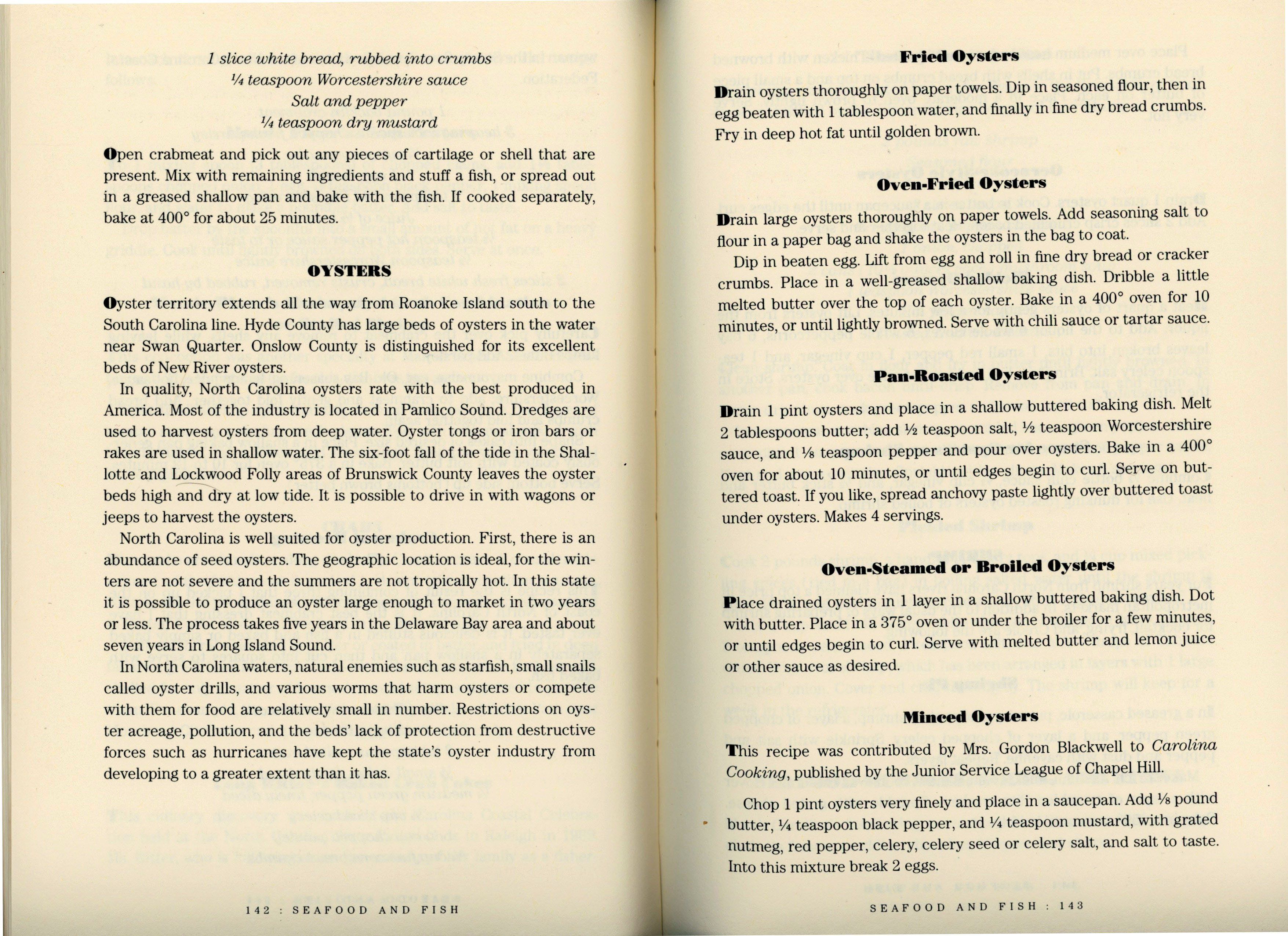
⬆︎ Two pages of the new edition. Click here for high-resolution version.

Lockhart

John Gibson Lockhart (1794-1854) was the son-in-law of Sir Walter Scott. Lockhart also wrote a seven-volume biography of Scott, as well as three other novels.

Lockhart died at Abbotsford, Sir Walter Scott’s home. (Scott died in 1832.) In fact it was the descendants of Lockhart and Scott’s daughter Sophia who eventually came to own Abbotsford. Scott’s oldest son inherited Abbotsford when Scott died, but he had no heirs. So the ownership of Abbotsford passed to Scott’s grandchildren by Sophia and John Gibson Lockhart. Today Abbotsford is owned by a trust.

There have been some fascimile versions of this novel, but that’s awkward given that the novel was originally published in three volumes totaling more than a thousand pages. Why this novel was out of print for so long, and why it became so obscure despite its merits, are interesting questions. My theory is that Lockhart made too many literary enemies during his lifetime, and that that turned into a literary grudge that persisted throughout the 19th century. Edinburgh was a hotbed of literary activity. There was a literary war between the Edinburgh Review, which was a Whig literary magazine, and Blackwood’s Magazine, which was its Tory counterpart. Lockhart wrote for Blackwood’s. His caustic articles there generated a lot of outrage, in particular Lockhart’s criticism of “the Cockney poets,” a category in which Lockhart included the much-loved John Keats.

It seems that Lockhart rather frequently embarrassed his father-in-law, and several references to Lockhart’s literary scrapes are found in Scott’s letters. This, for example, is from a letter to his daughter written in 1820: “I had yesterday a very kind letter from Lockhart who takes in good part the advice I ventured to give him about withdrawing from the personal skirmishes of the Magazine which in his new and dignified character of a married man and Wilson having become a professor would not do so well as formerly.”

In a letter in written in 1818, Scott refers to a literary scrape involving Lockhart, a friend of Lockhart’s, and Leigh Hunt (a notorious literary brawler): “…[S]o these wars must be decided by ink not by blood. I did acquaint these gentlemen that when first they set this heavy stone a rolling ’twould fall upon themselves.”


⬆︎ Click here for high-resolution version.
I asked an AI, Claude, to check all the references in the novel to places and terrain and to try to locate keys settings as accurately as possible. Claude drew this map. It’s northwestern England, the Furness Peninsula and Morecambe Bay near Lancaster.

The English Daltons

Most of Reginald Dalton takes place in Oxford, with scenes in London as well as in Scotland. But Reginald grew up in a parsonage in northwestern England. Because my own surname is Dalton, I am very curious about why Lockhart chose that surname. Lockhart had to have known that the Furness Peninsula is where the English Daltons were (and still are) concentrated. In Scott’s The Heart of Mid-Lothian, there is a character in northern England named Mrs Dalton, who is housekeeper to a bishop. It is very tempting to suppose that both Scott and Lockhart knew some of the English Daltons, but I cannot find any evidence of that by searching Scott’s letters or a biography of Lockhart. We do know, though, that Lockhart traveled through this area on his way from Scotland to Oxford.


⬆︎ My copy of the first edition, which I used for proofing. Click here for high-resolution version.

The Oxford novel

Reginald Dalton is often called the first Oxford novel. Lockhart was precocious, and he entered Balliol College, Oxford, when he was only 14. He read French, Italian, Spanish, and German. On a trip to the continent in 1817, when he was only 23 or 24 years old, he visited Goethe at Weimar.

Though Lockhart was abrasive in Blackwood’s Magazine, there is none of that in Reginald Dalton. There are many funny scenes, and Reginald is a very sweet and earnest young man, though he allows himself (for a while) to be led astray by another young Oxfordian who turns out to be neither sweet nor earnest.


⬆︎ Two pages from the 1823 first edition. Click here for high-resolution version.

Edinburgh University Press

Edinburgh University Press has an ongoing project called The Edinburgh Critical Edition of the Works of John Gibson Lockhart. Edinburgh has already published a critical edition of two of Lockhart’s novels, edited by Thomas C. Richardson. An Edinburgh edition of Reginald Dalton is in the works, edited by Caroline McCracken-Flesher. I don’t know when that academic edition is to be published. I was aware of it, certainly, when I brought out the Acorn Abbey edition. But Acorn Abbey’s edition of Reginald Dalton is a reader’s edition, at a reasonable cost, whereas the Edinburgh edition will be an annotated edition that probably will cost at least $130.


⬆︎ Abbotsford, from my visit there in November of 2024. Click here for high-resolution version.

We’re due for a Scott-Lockhart revival

Academics have not forgotten Sir Walter Scott and John Gibson Lockhart. The reading public have, and that includes the reading public in Scotland. I have often said that if my favorite Scott novel, The Heart of Mid-Lothian, was made into a movie, we would instantly have a Scott revival.

These novels are 200 years old, and, yes, they demand a lot from modern readers. One factor that puts readers off Scott, I think, is that the most frequently recommended Scott novel is Ivanhoe. I strongly disagree. Ivanhoe is the last Scott novel that one should read. The story is familiar, and it’s lacking in the warmth that is found in, say, The Heart of Mid-Lothian and The Antiquary.

And besides. Who doesn’t love Scotland.


⬆︎ Click here for high-resolution version.

Reginald

“He was naturally very handsome, and this, too, in a somewhat uncommon style of handsomeness, considering his race and his country; for though his eyes were of that clear, grave blue, which is seldom seen but in the north, the general cast of his countenance, both as to features and complexion, was rather what a painter would have called Italian. A profusion of dark chesnut curls lay on his forehead, the dancing blood of seventeen was in his cheek, and his lip, just beginning to be shaded with down, had that firm juvenile richness, which so rarely survives a single season of debauchery, or even of dissipation. His figure was light and nervous, and there was even a certain elegance about its motions, although Reginald had never had one single lesson in fencing, and I believe only about a dozen in dancing…”

Posing the wrong question


The cover of a new novel by Michael Tomasky, which I have not read.


It’s a very old trick question, so it’s not surprising that someone wrote a novel about it. The trick question is, “If you could go back in time and kill baby Hitler, would you do it?”

The trick in the question, of course, is to shame the person who says yes and then say that that person is no better than Hitler for being willing to kill a baby.

Why does no one ever seem to see through the trick? It’s the wrong question, and it’s a loaded question.

The right question is: Would the world be better off if one of the attempts to assassinate Hitler had succeeded? Depending on how you count them, there were between 15 and 40 schemes or actual attempts to assassinate Hitler after it was clear that he was a monster.

Framed that way, the obvious answer is: Hell yes. The world would be enormously better off. Millions of lives would have been saved. That question also leaves some room for hedging. To say that the world would be better off stops short of actually advocating a killing.

Would any morally decent person advocate killing a baby? I don’t think so.

Wikipedia has an interesting article on the baby version of the question and reframes the question in the right way: Can you hold a baby responsible for something it has not done? Still, the Wikipedia article thinks that utilitarians would have to say yes.

If you acknowledge that the world would be better off if the adult Hitler had been successfuly assassinated, then you’ve taken a stand on a question that is frequently asked today: Is political violence ever justified? You’ve taken the position that yes, political violence is sometimes justified. That’s a slippery slope, and it’s not a conversation that nice people want to have. Some people’s monsters are other people’s heroes.

A quote is often attributed to Oscar Wilde, though as far as I can determine Wilde never actually said it: “Some people improve the world only by leaving it.”

As a political question, I think the answer boils down to something that we already know quite clearly. That is that democracy contains appropriate solutions when governments go rogue, but that despotism, dictatorship, and tyranny do not.

Historians filled a vacuum. Why is that odd?


Heather Cox Richardson with President Biden. Source: Official White House photo via Wikimedia Commons.


The New Republic has a rather silly piece today by an obscure academic: How Historians Took Over Liberal Punditry: The hottest resistance talking heads during Trump 2.0 are academics. What happened?

The essay never attempts to answer the question of what happened. After sloshing around quite a bit in her academic specialty — the political mythologies of eastern European countries and how they were shaped by orthodox religion — the author’s point seems to come around to something entirely irrelevant. That is, she accuses historians such as Heather Cox Richardson of paying too little attention to the political mythologies of American evangelicals.

Oh, give us a break. We liberals know all we need to know about the political mythologies of American evangelicals. After all, we’ve seen the consequences of it. And we held our noses against the stench of it long before it led to Trump 2.0. Not to mention that Heather Cox Richardson pretty much wrote the book on how those mythologies were perpetuated after the Civil War.

Since Katherine Kelaidis never offers an answer to the question of what happened, I’ll have a go at it. What happened is that the mainstream media, terrified by fear of attacks from the radical right and held in check by corporate owners, simply cannot tell the plain truth about what has been happening in America. Liberals are not the sort of people to pay attention to know-nothing pundits. So we turned to academics, who just happened to be academics whom we already knew and trusted, like Heather Cox Richardson and Paul Krugman.

There’s a bit of an ancient trap in this — if your only tool is a hammer, then every problem looks like a nail. Katherine Kelaidis, whose only tool is the intersection of religion with national mythologies, just has to believe that there is something in that idea that we all need to have our noses rubbed in.

No we don’t, Katherine Kelaidis. We’re way ahead of you, because we don’t share your blinkers. Now please go back to being obscure.

There’s nothing radical about it


Zohran Mamdani, mayor of New York. Source: Wikimedia Commons

The lead story in the New York Times and elsewhere this morning is about how candidates backed by Zohran Mamdani, the New York mayor, won their primaries for New York City congressional seats. This, the Times writes, “sent shock waves through the Democratic Party.”

Horse wash.

There are 535 members of the U.S. Congress, and we are talking only about voters in New York City, who are some of the most liberal voters in the country. I don’t see what is so shocking about the idea that members of Congress should represent their districts.

But the New York Times’ spin is much worse than that. The Times’ story reveals how hard the mainstream media work to marginalize common-sense liberal values as though they are radical. The Times felt obliged to include a quote like this one:

“Republicans will very quickly seek to elevate, as they always do, the most radical voices in the Democratic Party,” said Howard Wolfson, a former head of the House Democrats’ campaign arm and a top adviser to Michael R. Bloomberg. “And after tonight, they will have more radical Democrats to choose from.”

Radical, my foot. There is nothing radical about the political values of these supposedly far-left candidates. The media always write about political conflict and rarely about what “far left” Democrats actually want. If they did, they wouldn’t be able to pass it off as radical and far left. Even worse, if the media told people what these “far left” candidates actually want, then more people might vote for them. Here’s a list:

• Higher taxes on high incomes

• Higher taxes on corporations

• Expansion of federal funding for housing, health care, and child care

• Higher minimum wage

• Large-scale investment in renewable energy

• Opposition to fossil fuel expansion

• Stonger emphasis on human rights in foreign policy

• Restrictions on federal surveillance

• Stronger ethics rules in Congress

• Diplomatic rather than military-first foreign policy

Why is it so shocking that people in New York would vote for these things? Our political and media ecosystems regard these ideas as radical. These are the same political and media ecosystems that laundered, sane-washed, and normalized right-wing political values right up to the edge of overt fascism. Why is it radical to start undoing what right-wing government for and by the oligarchy has done to this country?

If we really have a national government, including Democrats, that regards values like those in the list above as dangerously radical, then Mamdani is right. Only the Guardian was brave enough to quote Mamdani:

“The old politics that got us into this crisis is not the politics that’s going to get us out of this crisis.”

Ezra Klein: Snake in the grass. Now we know.


Source: Wikimedia Commons


Ezra Klein triggered my snake-in-the-grass detector long ago. It was clear that he’d sold out to someone, but previously I thought that it was only New York Times management that he’d sold out to, because the New York Times requires both-sidesism in its progressive commentary, and of course Klein wants to keep his job and his elite perch.

But now we know that it’s much darker than that. Yesterday, Wired magazine came out with a horrifying piece about Peter Thiel’s secret “Dialog” society, in which the names of its secret members were leaked. Ezra Klein is on the list, along with other elite snakes such as Jonathan Haidt, Steven Pinker, Jared Kushner, Elon Musk, and even some old snakes like Grover Norquist. The Wikipedia article includes some of the names.

The Wired piece is Leak Exposes Members of Peter Thiel’s Secretive ‘Dialog’ Society. It is an invitation-only group. They are all snake aristocracy, and they all know each other.

There is much about Ezra Klein that is irksome, starting with his attitude. Certainly he is smart, but his narcissistic belief that he is ever-so-much smarter than everyone else oozes like pus into everything he writes. His lofty insights, he thinks, are eminently elevated above anything the rest of us common folk can see. So he condescends to point it all out for us, rub our silly noses in it, and then reframe the dialogue.

His grand discovery of the “abundance” theme was one of the things he tried to sell us — Reagan-style supply-side economics warmed over. Too many people fell for it. His brand of liberalism is to save liberals by berating them and bamboozling them. Just think of the gall it takes to repackage anti-regulatory business agendas and right-wing abundance theology as just the thing to save the Democratic Party.

The next Dialog retreat, by the way, is scheduled for August in Ireland.

It will be interesting to see whether the New York Times will be bothered to be embarrassed by this. We stand to learn something about how New York Times management thinks these days.

According to Wired, it was a Swiss hacktivist, who, acting on a tip, found the data and leaked it. This emphasizes how important it is to use every means possible to surveil the global elite to try to track, and expose, what they are up to and how they coordinate their strategy. It’s no surprise that people like Peter Thiel, Jared Kushner, Rick Warren, Ted Cruz, and Tulsi Gabbard are on the list. That we now know that the likes of Ezra Klein and Jonathan Haidt are on the list is a huge breakthrough in open-source intelligence. Some of us saw through Klein’s and Haidt’s disguised agendas long ago. Now, it is to be hoped, nobody (other than Republicans) will ever again take seriously anything they say.

We know who they are. We know what they want.


Graphic by ChatGPT 5.5. Click here for high-resolution version.


Hillary Clinton called it “the vast right-wing conspiracy.” That’s exactly what it is. I should hasten to add that it is not a conspiracy theory, though, because it’s all out in the open now where we can see it. Still, the right-wing elite are as secretive and covert as possible, so it’s a constant challenge to uncover as much as we can of what they’re up to and bring it out into the open.

Once upon a time, so-called conservatives could lie to us about what they really want, mouthing noble-sounding lies about limited government, fiscal responsibility, and personal liberty. But only a tiny handful of them were actually serious about that. (Liz Cheney, please take a bow.)

Now they have revealed what they really want and have wanted all along — a cruel and Stalinist chief executive, a legal system that does not apply to elites but which can be brutally enforced against the little people by militarized police, extreme (and untaxed) wealth, the destruction of institutions that support democracy and expertise, and elite right-wing rule that cannot be challenged by the little people, whether through law, protest, or elections.

What a bunch of nasty people! Part of the work that must be done is helping those who have been deceived by them to see what they really are and what they really want. That’s much easier to see now than it used to be.

I was impressed at Simon Schama’s putdown of J.D. Vance’s outrageous remarks at a D-day ceremony in France. Schama called Vance’s speech “a special kind of loathsomeness: a blend of historical deafness, grotesque stupidity and comically ludicrous self‑importance.” He called Vance “a comic book nobody.”

I’m also thinking of the DNC’s response to Stephen Miller’s vile insult of James Talarico: “Shut up you ugly fuck.

We don’t have to choose between the high road and the low road. There are no noble terms with which to describe the lowest of the low — the comic book nobodies and ugly fucks who want to own the world and treat the rest of us like cattle.